Three counties, not fifty city pages
State the counties you actually cover on one honest page and route quotes by zip. Spun city doorways teach the wrong map and get ignored.
William Spurlock Founder — Spurlock Studios 10 MIN
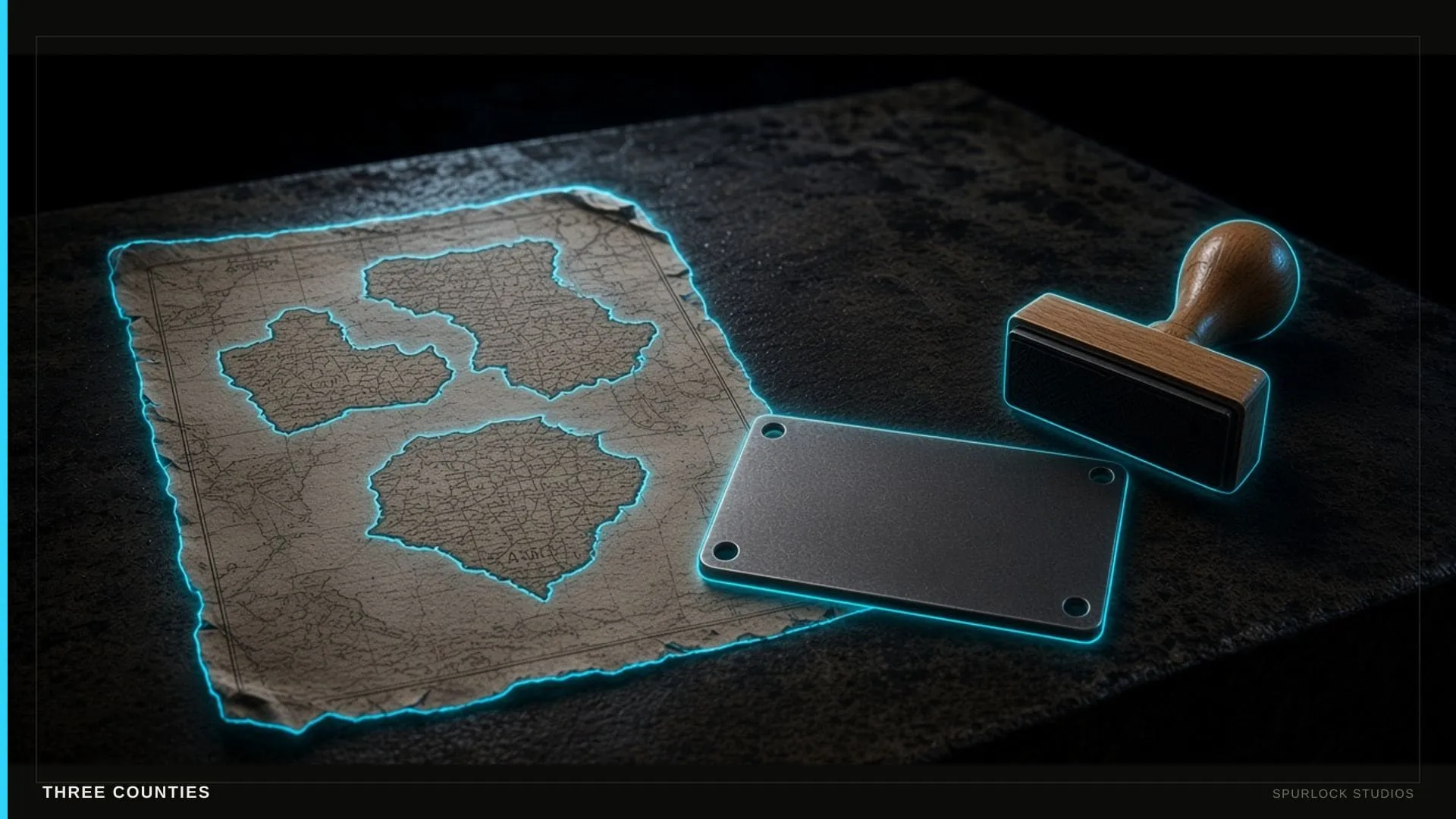
You cover three counties. The vendor wants fifty city pages. That is how you teach Google a lie and teach the customer a wait you will not keep.
I am in Michigan. I build shop sites, not doorway farms. The shop site that answers the phone is the fold: number, hours, area, quote path. This note is the area page. State the counties you actually run. Route the quote by zip. Do not spin a URL for every town on the map. I will not invent a ranking lift or an HVAC conversion rate to make the honest page sound bigger.
The short answer
- Name the counties the trucks actually run. Put them on one page a thumb can read.
- Let the quote form route by zip. That is how you sort jobs. That is not a reason to clone a city template sixty times.
- Keep the site and Google Business Profile on the same service area. If the card says Kent and the site says “all of Michigan,” you authored two shops.
- A second city page is allowed when you have proof and dispatch you can defend. A swapped H1 is not proof.
- If you only have a Facebook page, start at /shops. Do not buy a city farm to look busy.
Why do fifty city pages fail?
They fail because they are the same paragraph with the town name swapped. Google’s spam policies call out pages created to rank for similar queries and funnel people to one generic destination. That is doorway language. I will not dress it up as “local SEO at scale.”
They also fail in the shop. You publish “same-day in Holland” because the template needed a city. Dispatch does not run Holland on Thursdays. The customer booked a lie. That is not a ranking problem. I will not invent the review you earn from it.
The longer checklist lives in The Trades and SMB Website Playbook. This is the Tuesday version: three counties, one page, a form that knows the zip.
What does one honest service-area page say?
It says where you go, where you do not, and how a quote gets to a person who can say yes.
Minimum copy:
- The counties, and the towns you will actually name out loud.
- The work you take in those counties — emergency vs scheduled, residential vs commercial — without writing 24/7 if you close at five.
- A sentence on what happens after they submit: who calls, and when.
- The same name, phone, and hours as the map card.
That is enough for a buyer in a driveway. It is also enough for a crawler. You do not need a unique sonnet per zip.
I have a live HVAC shape in the book — AllCity HVAC — built around per-system pages and a quote form that routes by zip. The service area is a fact on the site, not a city factory. I will not attach a fake pack rank to that name.
How does zip routing replace a city farm?
The buyer already typed a city or they already know their zip. You do not need a URL for each. You need a form that asks the zip and lands the job with the right shop or the right tech book.
Zip routing keeps out-of-area requests out of the emergency pile, matches the counties you printed, and gives the after-hours rail the same fact the site uses. The missed-call text-back should not ask for a county the homepage never named.
What zip routing is not: a trick to rank for every town. Ranking still comes from a real profile, real pages, and work you can show. The form is ops. If you later earn a second page — a city you run every week, with a photo from that job — write that page. Do not start there.
What has to match Google Business Profile?
Name, phone, hours, and the service area. Google’s representation guidelines want one profile for a service-area shop, a designated area, and no fake walk-in pin. Hide the street address if customers do not visit. Do not pin a house as a showroom.
The site should not invent a wider map than the card. The card should not invent a storefront the site denies. Google Business Profile vs the website is the invest-first split. If the card is empty, fix the card first. Fifty new URLs will not save the wrong hours.
When is a second page actually justified?
When you can pass a shop test, not a keyword test.
- You dispatch there on a pattern you can say without checking a spreadsheet.
- You have one local receipt: a job photo, a permit note, a crew that knows the housing stock.
- Someone on staff can update the page when you stop running that county.
- The page links back to services and to the parent area hub. It is not an orphan built for search.
If you cannot name those, you want a line on the hub page, not a new route. The $1,500 Website Direction Sprint is how you see that map before you buy the $8,000 Business Site.
I will not write you eighty city files so a report looks thick. I will write the counties you cover and a form that respects them.
Where to start
- Door in shop language: /shops.
- Fold, number, hours: the shop site that answers the phone.
- You already have a site and it claims the whole state: send the shop brief.
Do I need a page for every city in the county?
No. Name the county. Name the towns you will say on the phone. Let zip routing sort the rest. Extra city URLs are for places you can prove, not for a spreadsheet of “near me” tokens.
What if I really do cover a huge area?
Then say the real radius and staff it. Google’s own representation notes that a service area should not casually stretch farther than about two hours from where you are based, with room when the trade honestly travels farther. A statewide claim with three trucks is still a lie even if the keyword tool likes it.
Can I keep the city pages I already paid for?
If they are unique and you still dispatch there, keep them and attach them to the hub. If they are clones, take them down or fold them into the one honest page. I would rather shrink the map than keep a doorway you cannot defend.
What questions does this article answer?
- Do I need a page for every city in the county?
- No. Name the county. Name the towns you will say on the phone. Let zip routing sort the rest. Extra city URLs are for places you can prove, not for a spreadsheet of “near me” tokens.
- What if I really do cover a huge area?
- Then say the real radius and staff it. Google’s own representation notes that a service area should not casually stretch farther than about two hours from where you are based, with room when the trade honestly travels farther. A statewide claim with three trucks is still a lie even if the keyword tool likes it.
- Can I keep the city pages I already paid for?
- If they are unique and you still dispatch there, keep them and attach them to the hub. If they are clones, take them down or fold them into the one honest page. I would rather shrink the map than keep a doorway you cannot defend.
Last reviewed — Shop-door service-area spoke under the Sep 12 pillar. No invented local rankings. Checked 2026-09-12.
Keep reading.
 Websites
 The shop site that answers the phone
A Midwest shop does not lose the job to a prettier hero. It loses the job to whoever looks real and picks up. Here is what the site has to do on a Saturday.
 Websites
 Spec buyers will not order what they cannot see
A forge or architectural-metal site is a spec packet: commissions, process, materials. It is not a tap-to-call HVAC homepage. AllCity is the phone. Matt Coffey is the work.
 Websites
 The Trades and SMB Website Playbook: Speed, Trust, and the Phone Call
HVAC and trades sites convert on speed, fold-level proof, and a tap-to-call path that works on a job-site phone — not brand cinema or chat widget walls.
Websites
 Websites
 Linktree is a leak — build the house
Spotify does not send you the fan’s email. Instagram rents the following. Linktree is a hallway with no register. The House is the owned room: site, membership, checkout, follow-up.
 Websites
 A media kit the brand can steal in sixty seconds
Influencers need a brand-safe /media or /kit with rates and demographics you can stand behind — not a Google Doc with dead links. This is not a booker EPK.
 Websites
 Creator Site or Business Site for the house?
Creator Site ($3,500) is tour, listen, join, buy. Business Site ($8,000) is the register. Pick after the $1,500 sprint — not before you have seen the house.
 Websites
 Discord is unpaid labor — put a register on the house
Keep Discord if the room lives there. The house is the owned URL, checkout, and join path so the community collects money instead of leaking attention.