Spec buyers will not order what they cannot see
A forge or architectural-metal site is a spec packet: commissions, process, materials. It is not a tap-to-call HVAC homepage. AllCity is the phone. Matt Coffey is the work.
William Spurlock Founder — Spurlock Studios 10 MIN
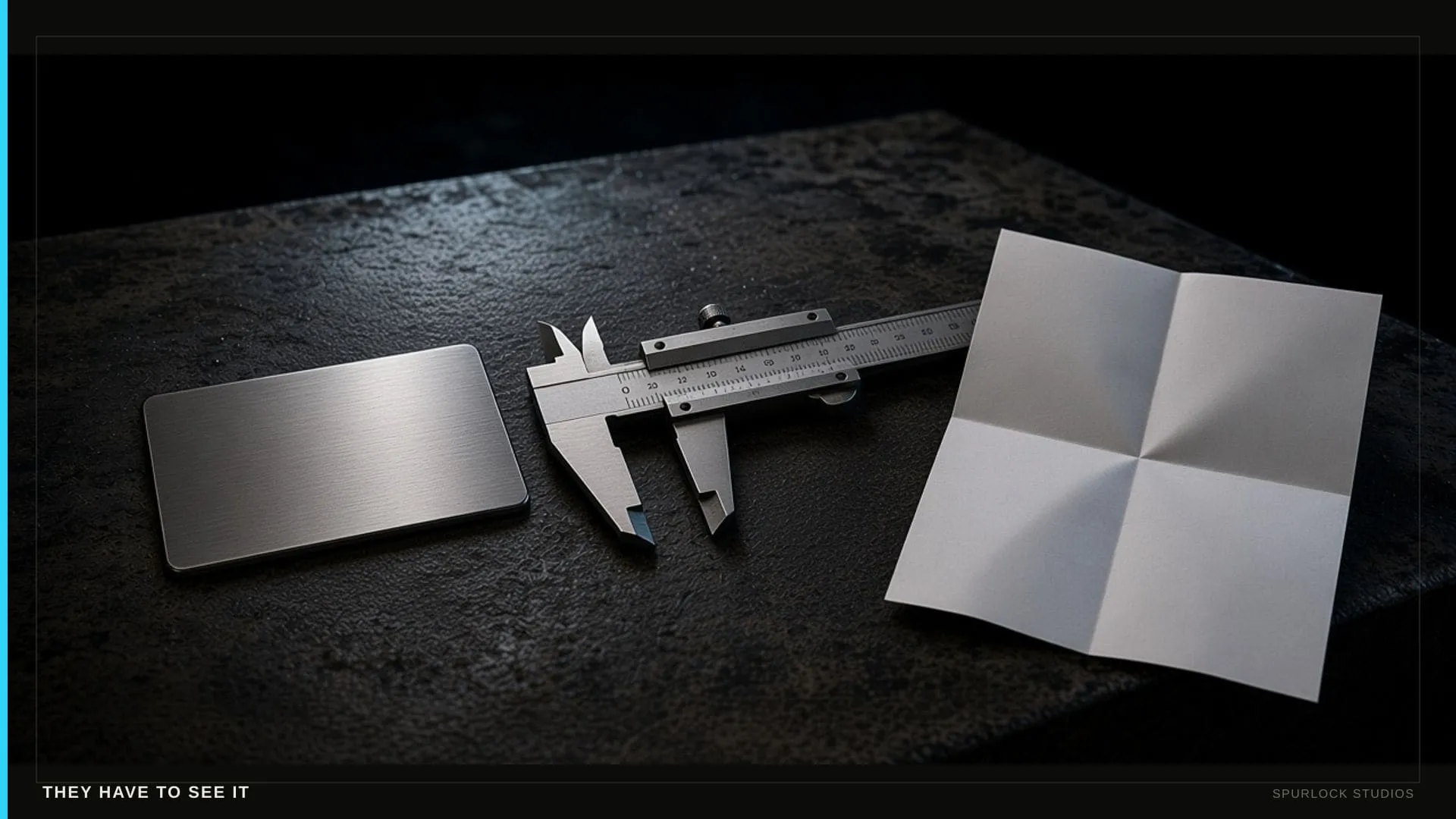
Architects will not spec forged work they cannot evaluate online. That is the whole brief. It is not a Saturday furnace call.
The shop site that answers the phone is still true for the HVAC door: tap-to-call, hours, counties, a short quote path. This note is the other shop in the same room — B2B trades, forge, architectural metal. The site is a spec packet. I am in Michigan. I have shipped both shapes. I will not mash them into one homepage.
AllCity HVAC is the phone. Matt Coffey Design is the work. I will not invent a spec-win rate for either.
The short answer
- If the buyer is writing a spec, show finished commissions, process, and materials. A stock handshake and a “learn more” hero will not get you on the sheet.
- Keep a number they can tap. Do not make the number the only proof. The packet has to travel without you on the call.
- Do not copy an HVAC fold onto a forge. Speed-to-quote is the wrong first job when the job is a railing, a gate, or a stair that has to match drawings.
- Do not copy a cinema portfolio onto an emergency trade. The driveway buyer still needs the phone. See the pillar.
- The door for both shops is /shops. The sprint is how you see which fold you are buying.
Why is a spec buyer not a Saturday furnace call?
The HVAC buyer is cold. They will call the first shop that looks real and picks up. Minutes matter. Zip routing matters.
The spec buyer is an architect, a builder, or a homeowner spending months on a house. They need weight, joinery, finish, and whether you can install what you show. They will open the site in a meeting and forward a URL. If the work is not there, they will spec the catalogue they can see.
Same trade family on this studio’s door. Opposite first job.
| Job | HVAC shop | Forge / architectural metal |
|---|---|---|
| First ask | Tap-to-call or a four-field quote | See the commission, then a conversation |
| Proof | License, area, a real truck or job photo | Finished work, process, materials |
| Time | The unit is down now | The drawing set is in progress |
| Form | Zip, system, callback | Project type, site, enough to start a spec talk |
| Failure | Voicemail, hidden number, fake 24/7 | A moodboard with no install capacity |
If you run both kinds of work out of one company, you still need both proofs. A pretty gallery that hides the service number loses the emergency. A giant Call Now button with no work loses the spec.
What does a spec packet look like on a site?
It looks like something a stranger can evaluate without you narrating.
Finished commissions. Not three beauty shots and a watermark. Enough work that a buyer can tell you have done their class of thing — railings, gates, furniture, structural art.
Process. How a commission moves from drawing to install. Who approves what. What you need from the architect. This is not a manifesto. It is the sequence so they stop guessing.
Materials and joinery. Steel, bronze, finishes, the words they will put on a sheet. If you cannot say it in their language, they will specify a vendor who can.
Capacity. Lead time ranges you can defend, install geography, what you will not take. I will not invent a week count for you. If you do not know it, do not publish a fake one.
A path to a conversation. Contact that is not a twelve-field CRM costume. Project type, location, a way to send drawings. Then a human.
Matt Coffey’s site is built that way: forge-black, commissions in front, process and materials behind the fold, a start-a-commission path. Traverse City work for Northern Michigan homeowners and design partners. The commissions do the selling. That is the shape. Not a win-rate.
AllCity is the phone. Matt Coffey is the work. Why both?
Because Midwest shops are not one product.
AllCity is organized around speed-to-quote: per-system pages, local schema for the map pack, a form that routes by zip. The buyer is an owner whose leads go cold inside an hour. Cinema is the wrong craft.
Matt Coffey is organized around evaluation: the people writing the specs will not commission from a shop they cannot see. A tap-to-call HVAC header on that work would look like you are ashamed of the steel.
I keep both on /shops so you can point at the one that matches your Tuesday. If you are HVAC, read the pillar and the missed-call rail. If you are a forge, stay here. If you run both, we pick a primary fold in the sprint instead of averaging two bad pages.
I will not attach a close rate to AllCity or a spec-win rate to Matt Coffey. Portfolio names prove the kind of site. They are not a license to fabricate outcomes.
What should a forge or shop skip?
Skip the purple parallax and the blog about innovation in metal. Skip the city-doorway farm. Skip stock sparks if you have a real anvil.
Skip hiding the work behind a password “portfolio” unless the NDA is real. A spec buyer who cannot see the work will not sign your NDA to find out whether you can do the work.
Skip a twelve-field form that asks for budget, headcount, and “role.” You are not qualifying a SaaS trial.
Keep hours and service area honest. A forge that only takes Northern Michigan installs should say so. The three counties rule still applies. You just lead with the packet, not the county list.
Where to start
- Door for both shop types: /shops.
- HVAC fold, if that is actually your buyer: the shop site that answers the phone.
- You want to see the spec site before you buy the build: $1,500 Website Direction Sprint. The $8,000 Business Site is the build when the packet is the product.
Should we still put the phone in the header?
Yes. Spec buyers call. They also forward the URL. The number stays visible. It does not replace the gallery, the process, or the materials. Hiding the phone to look “high end” is a vanity I will not ship.
Is this a Creator Site or a Business Site?
Published prices on this studio: Creator Site $3,500, Business Site $8,000, sprint $1,500. A spec packet with commissions, process, and local schema is Business Site work in practice. The sprint exists so you see the fold before you buy either. I will not upsell you a film you do not need.
Can we launch with three photos and add the rest later?
You can launch thin. You cannot launch empty and call it a spec packet. If the work is not photographable yet, say so and show process and materials with what you have. Do not rent stock steel and hope an architect does not notice.
What questions does this article answer?
- Should we still put the phone in the header?
- Yes. Spec buyers call. They also forward the URL. The number stays visible. It does not replace the gallery, the process, or the materials. Hiding the phone to look “high end” is a vanity I will not ship.
- Is this a Creator Site or a Business Site?
- Published prices on this studio: Creator Site $3,500, Business Site $8,000, sprint $1,500. A spec packet with commissions, process, and local schema is Business Site work in practice. The sprint exists so you see the fold before you buy either. I will not upsell you a film you do not need.
- Can we launch with three photos and add the rest later?
- You can launch thin. You cannot launch empty and call it a spec packet. If the work is not photographable yet, say so and show process and materials with what you have. Do not rent stock steel and hope an architect does not notice.
Last reviewed — Shop-door B2B / forge spoke. AllCity vs Matt Coffey shapes only. No invented spec-win rates. Checked 2026-09-12.
Keep reading.
 Websites
 The shop site that answers the phone
A Midwest shop does not lose the job to a prettier hero. It loses the job to whoever looks real and picks up. Here is what the site has to do on a Saturday.
 Websites
 Three counties, not fifty city pages
State the counties you actually cover on one honest page and route quotes by zip. Spun city doorways teach the wrong map and get ignored.
 Websites
 The Trades and SMB Website Playbook: Speed, Trust, and the Phone Call
HVAC and trades sites convert on speed, fold-level proof, and a tap-to-call path that works on a job-site phone — not brand cinema or chat widget walls.
Websites
 Websites
 Linktree is a leak — build the house
Spotify does not send you the fan’s email. Instagram rents the following. Linktree is a hallway with no register. The House is the owned room: site, membership, checkout, follow-up.
 Websites
 A media kit the brand can steal in sixty seconds
Influencers need a brand-safe /media or /kit with rates and demographics you can stand behind — not a Google Doc with dead links. This is not a booker EPK.
 Websites
 Creator Site or Business Site for the house?
Creator Site ($3,500) is tour, listen, join, buy. Business Site ($8,000) is the register. Pick after the $1,500 sprint — not before you have seen the house.
 Websites
 Discord is unpaid labor — put a register on the house
Keep Discord if the room lives there. The house is the owned URL, checkout, and join path so the community collects money instead of leaking attention.